
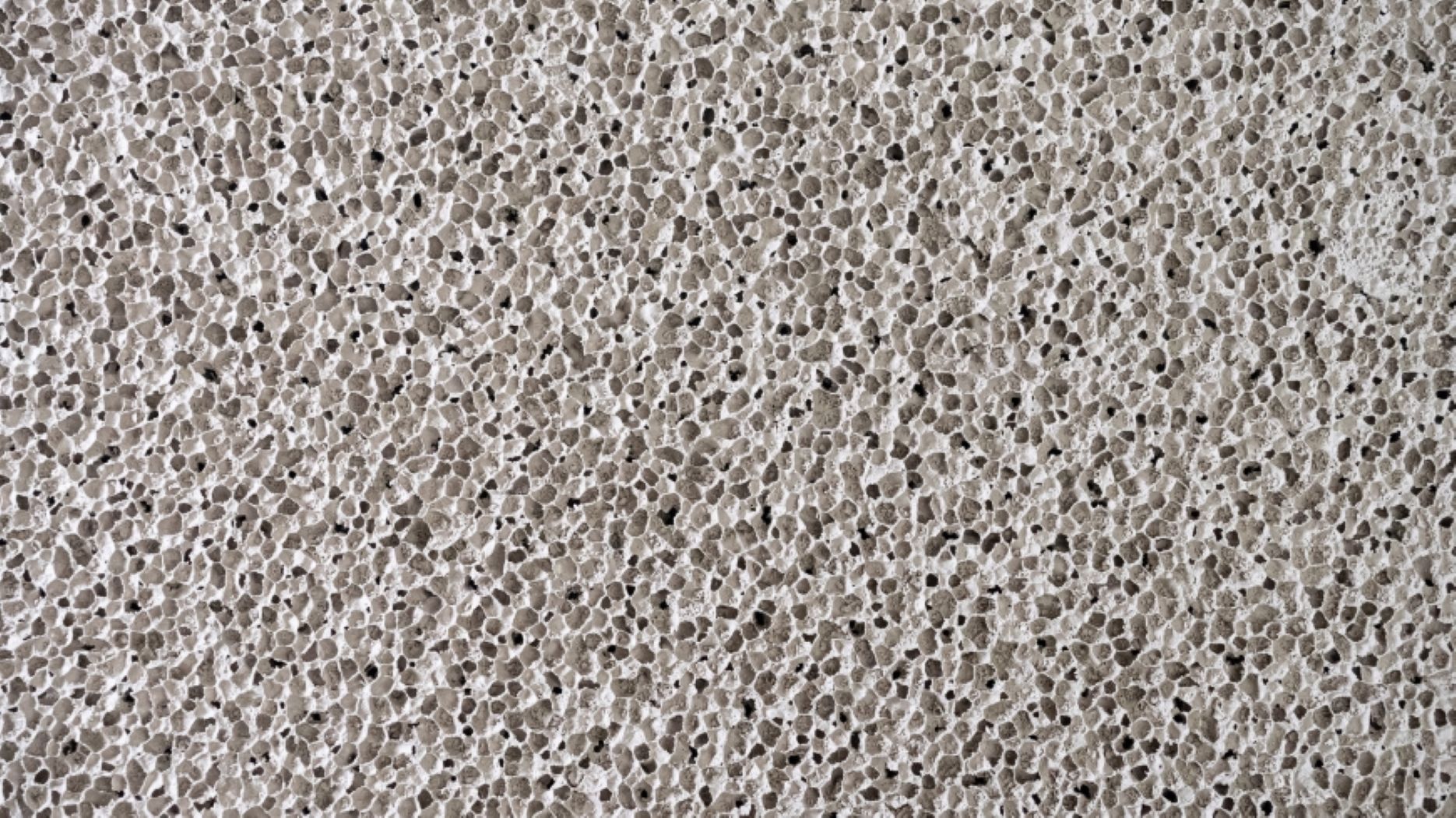
In construction, blocking noise typically involves using thick, bulky materials such as rock wool or foam, which can occupy a significant amount of space and limit design options, especially outdoors.
That’s why Empa researchers teamed up with de Cavis to develop ultra-thin sound absorbers made from gypsum or cement foams. They’re about four times thinner than traditional ones but work just as well, even for low-frequency noise.
These ultra-thin sound absorbers punch way above their weight thanks to a clever, patented design. The mineral foams have a complex pore structure that forces air particles to twist, turn, and take a longer journey through the material. This mimics the effect of thicker absorbers by slowing down sound waves, particularly those of low frequency.
The advantages are:
- Can be fine-tuned for different sound types
- Easy to cut and install
- Fireproof, recyclable, and free of harmful particles
- Cement-based versions are weatherproof, making them great for outdoor use.
What matters most? Big pores with thin walls, a combo that supercharges sound absorption despite minimal thickness. The structure creates a dense obstacle course for noise, effectively disrupting it.

Researchers stack multiple porous layers, each with varied thickness and pore sizes. They even add tiny holes to fine-tune how sound is filtered.
Over 90% of the foam is air, and it’s made using standard plaster or cement techniques. Currently, the tiny perforations are done by hand, but the rest is compatible with mass production.
Researchers used computer models to study how air moves through the tiny pores in mineral foam. Their calculations revealed that just four thin layers, totaling 5.5 cm in thickness, are sufficient to block sound in the targeted frequency range.
In a real-world test conducted in Zurich, researchers installed a 12-square-meter prototype of the new mineral foam sound absorbers in a city driveway. Guided by simulation data, they carefully positioned 72 foam panels along the walls to optimize noise reduction. Once in place, controlled on-site measurements confirmed the design’s effectiveness, with a noise level drop of up to 4 decibels. The decrease was especially noticeable when cars entered or exited the driveway, as the sound waves were reflected multiple times between the panels before dissipating into the courtyard.
Tests have shown that these innovative mineral foam panels are more effective than traditional rock wool at blocking low-frequency noise, although they’re slightly less effective at higher frequencies. Still, they successfully reduce sound in their target range, even with compact setups like the one in the Zurich driveway.
These panels could be added to driveways, under balconies, and on noisy façades.
Empa researcher Bart Van Damme said, “Ideally, absorbers are already taken into account in the architectural design of new buildings. The elements can also be easily integrated into stairwells or large interior spaces such as offices, canteens, or sports halls – also from a design perspective, as the porous mineral foam is made of the same material as the surfaces of the walls.”
“The idea for the absorber originated several years ago. However, the breakthrough only came through the combination of material development and acoustic modeling as part of an Innosuisse project. Thanks to the modeling, the absorber can now be flexibly customized: Should it dampen particularly low tones, such as in large halls? Or should it be more effective in the mid-range, such as in traffic noise, offices, or classrooms?”