Stanford researchers have unveiled a lightweight holographic headset that could revolutionize mixed reality. Using AI-enhanced holography and a synthetic aperture waveguide, the display projects lifelike 3D images directly into your eyes—so realistic, it might soon pass the Visual Turing Test, fooling you into thinking digital images are real. Unlike today’s bulky VR gear, this ultra-thin prototype offers wide views, sharp detail, and all-day comfort. With applications in education, entertainment, and communication, it marks a major leap toward immersive smart glasses. The final phase aims to bring this futuristic tech to market.
Stanford’s AI-Powered Holograms Are Bringing VR Glasses Closer to Reality
Breakthrough display tech could pass the Visual Turing Test, and change how we see the world.

Explore more ..
Samsung Unveils New Memory Tech for AI
Samsung showcases zHBM, zNAND-O and 400-layer V10 BV-NAND at FMS 2026.

Intel Collaborates with Lens Technology on Glass Chip Packaging
The partnership aims to speed up glass substrate manufacturing, a technology expected to power future AI chips, servers, robotics, and edge devices.

This Small Device Harvests Electricity From Exhaust
A Penn State prototype turns exhaust heat into electricity and works without the bulky cooling systems that have held back similar ideas for years.

Swiss Students Just Fired One of the World’s Rarest Rocket Engines
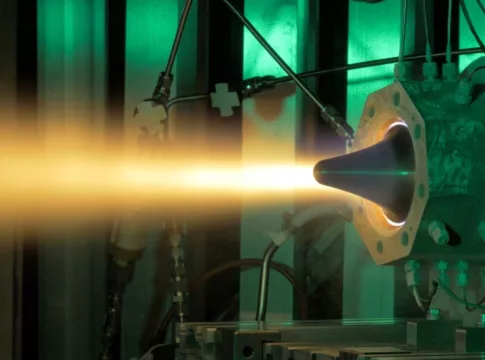
An ETH Zurich student team successfully ignited a rotating detonation rocket engine, a futuristic system that could make future space launches cheaper and more efficient.