
Detecting molecules on distant objects in the Solar System has been challenging due to Earth’s atmospheric and instrumental limitations. However, the James Webb Space Telescope’s near-infrared observations have provided new molecular insights into trans-Neptunian objects (TNOs). Research by the University of Central Florida has contributed to a deeper understanding of the formation and evolution of the outer Solar System.
New molecular details on trans-Neptunian objects
Best glimpse ever into the icy planetesimals.

Explore more ..
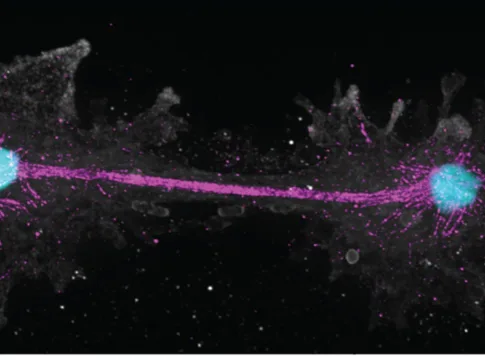
Newly discovered ‘fire amoeba’ eats and reproduces at 63°C
It establishes higher thermal limits for eukaryotes
Plants move away from decaying zones
A previously unknown way plants navigate their underground environment

Scientists’ preferences may hold back animal science discoveries, per a study
The study advocates broadening of the research scope.

Earth’s Ozone Hole Was Surprisingly Small in 2025
The Antarctic ozone hole shrank compared with recent years, offering a hopeful sign in the long effort to protect Earth's ozone layer.
