
Using supercomputer simulations, a NASA study offers possible explanation on the formation of Mar’s Moons. According to it, Mars’ strong gravitational pull ripped apart a passing asteroid. The debris were then scattered into various orbits around Mars. As time passes, the material clumped together and formed Mar’s moons.
How did Mars get its moons?
The origin of Mar’s moons

Explore more ..
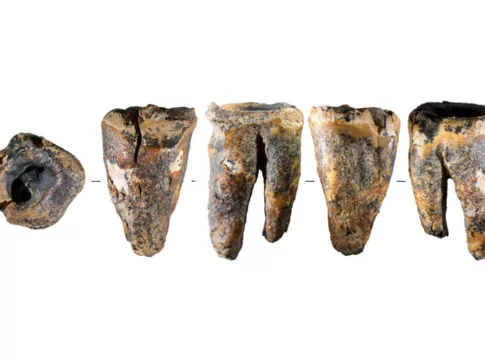
Scientists discover 59,000-year-old Neanderthal dental surgery
A damaged molar from Siberia suggests Neanderthals may have intentionally drilled a painful cavity thousands of years before modern humans developed dentistry.
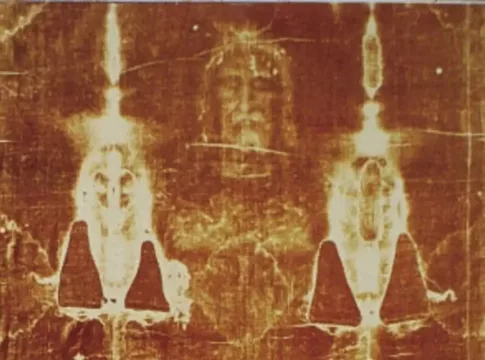
Shroud of Turin’s DNA Maps Centuries of Human Contact
Scientists extracted DNA from samples collected in 1978 and what they found buried in those ancient threads is far more layered than anyone expected.
Discovery of auroras on rogue planet challenges current models
These insights are pushing the boundaries of our understanding of alien atmospheres.

Inside the Milky Way’s largest star-forming cloud, seen by Webb
Sagittarius B2 is so much more active than the rest of the galactic center.
